Every station here posts its numbers before it asks for your money: ice output per 24 hours, oranges per minute, pounds of bone per hour. Read the spec sheet for the station you need, then compare the tier that fits your floor.
Read the spec sheet before you trust the word commercial: the flagship ice machine runs 220V power, R404a refrigerant, and an insulated storage bin. Coverage runs uneven across the stations, so read the term on the card before you sign for the crate. The slushy machine holds one year, and the flagship ice maker states no term at all.
Order a juicer, a slush tank, and a bone saw in the same week and your parts and support still run through a single desk instead of four. Bolt the 47.4-lb under-counter machine beneath a bar rail, or stand the 78.7-inch flagship in a hotel ice room. Set the milk frother wand on a countertop beside the commercial units and it stands out as the outlier: 91 reviews from verified buyers put it at 4.6★ after months of daily shifts.
Search the commercial machines for owner reviews tonight and you find almost none, so judge them on spec sheets and coverage rather than stars.
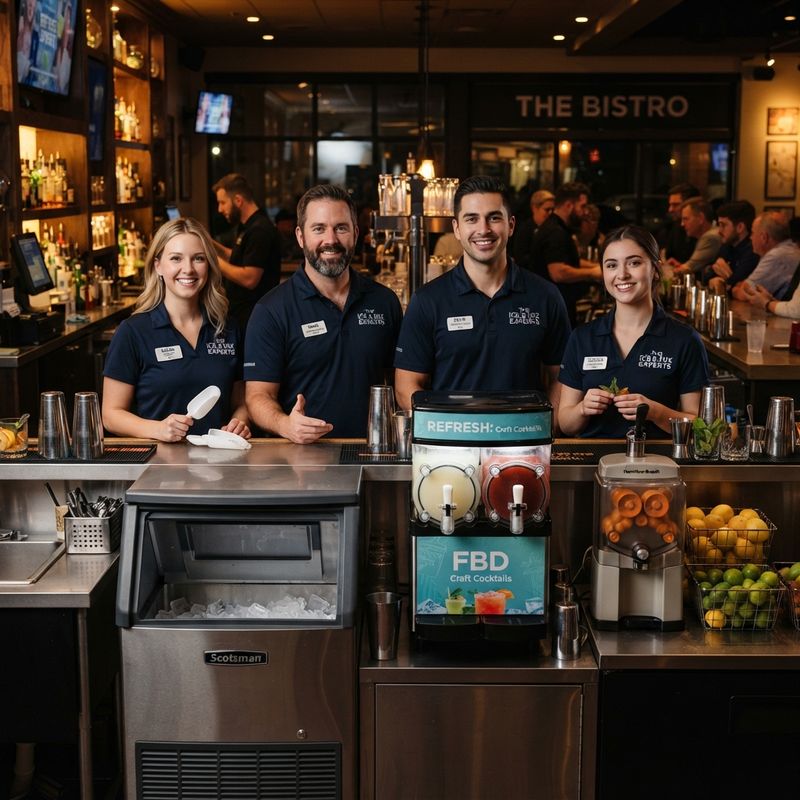
CMICE builds for the back of house: ice machines that run from a single bar well up to a hotel ice room, a citrus juicer that takes whole fruit, a dual-tank frozen drink machine, and a bone saw sized for a butcher case. A rechargeable milk frother wand sits alongside them as the one countertop tool in the group, and it is the only unit here with a year of buyer feedback behind it.
The stations share a design brief rather than a shell: food-grade stainless where a wash-down happens nightly, throughput printed as a number a buyer can test on delivery day, and an after-sales line that answers outside business hours on the machines that carry it. Where a certification mark is absent, these pages name the gap instead of writing around it, because an operator finds out at the county walkthrough otherwise.
Judge the equipment the way a kitchen buyer judges any unfamiliar brand: hold the published throughput against the machine in your other tab, read the coverage term for the exact station rather than for the brand, and test hard in the first weeks while the return window is still open.