Hold a Full Bin Through a Saturday Rush
The flagship machine makes 1000 lbs a day and stores 640 lbs in an insulated bin, so the well survives to close.
Commercial prep and beverage equipment
Sizing equipment on a tight startup budget? CMICE covers ice, juice, slush, and bone cutting in one brand, from 100 lbs to 1000 lbs of ice a day.
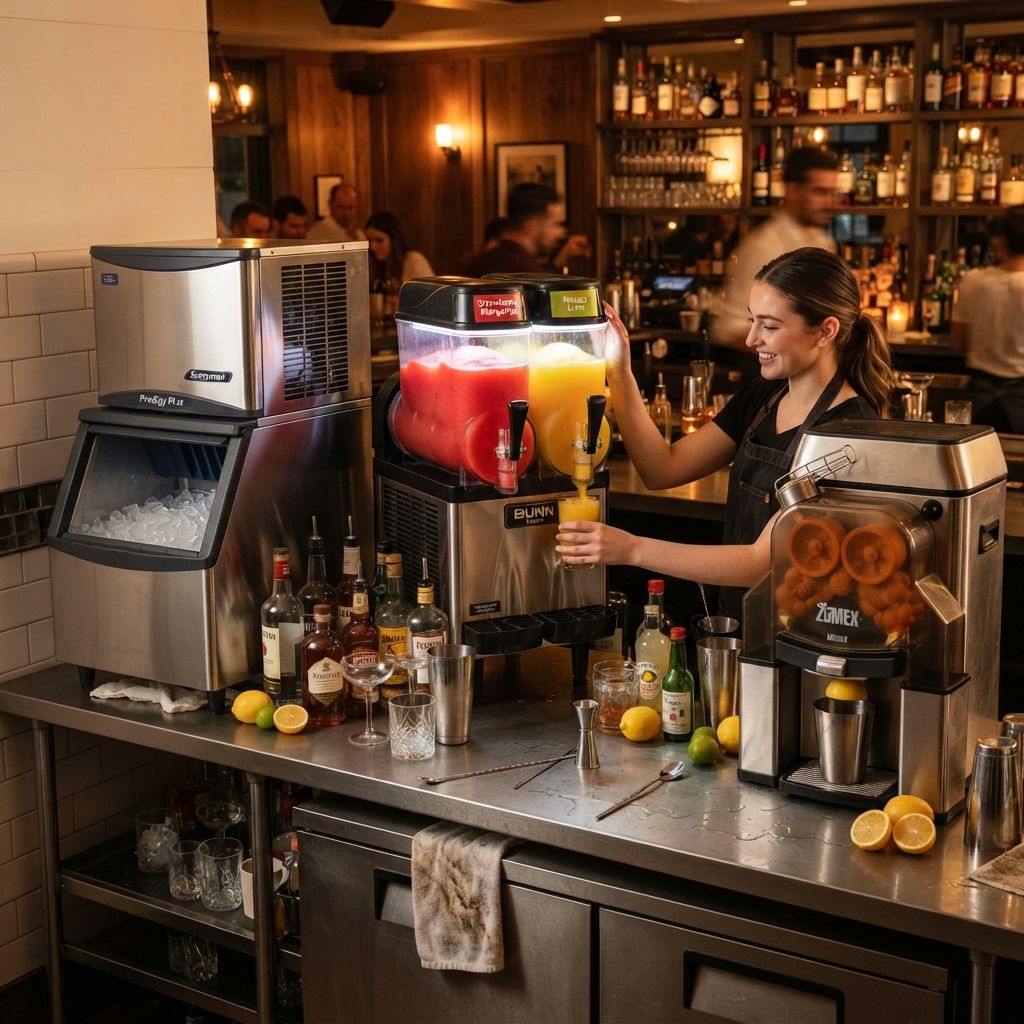
CMICE publishes the number behind each claim here: ice output per day, juice throughput per minute, and the warranty term per station.
The flagship machine makes 1000 lbs a day and stores 640 lbs in an insulated bin, so the well survives to close.
Set the guide from 0.12 to 3.93 inches and fresh pork, frozen beef, and hard bone all cross the same worktop.
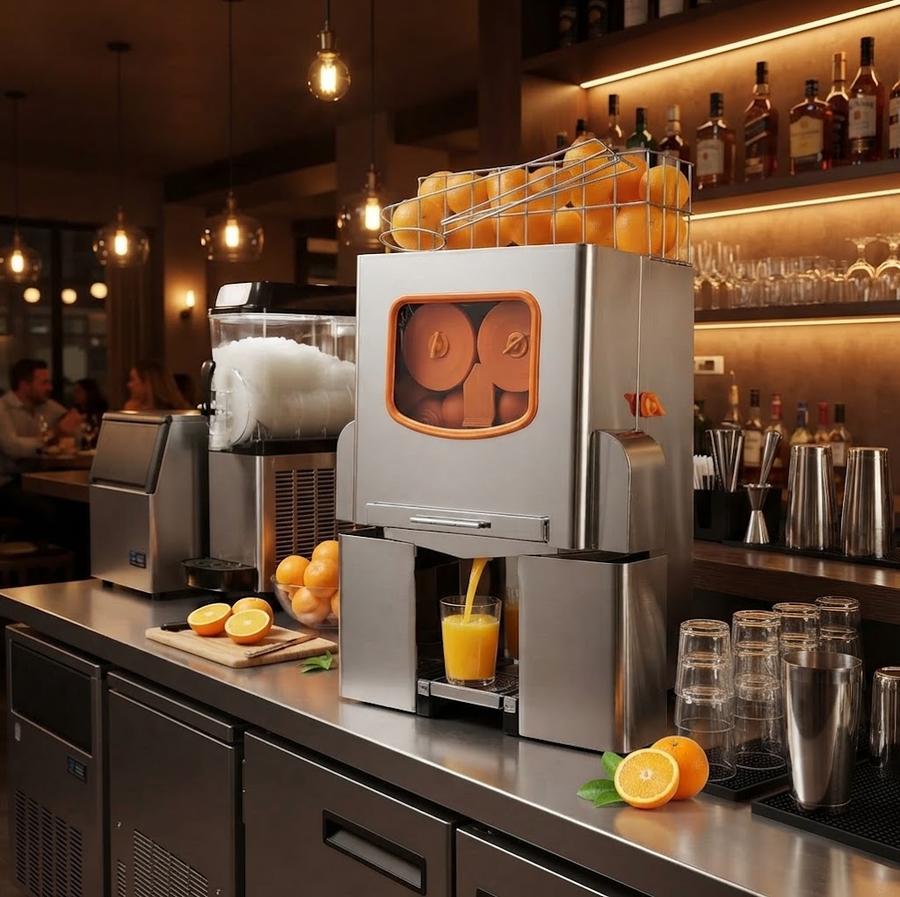
Whole oranges, pomegranates, and lemons drop into the chute, and 22 to 30 a minute come out juiced and filtered.
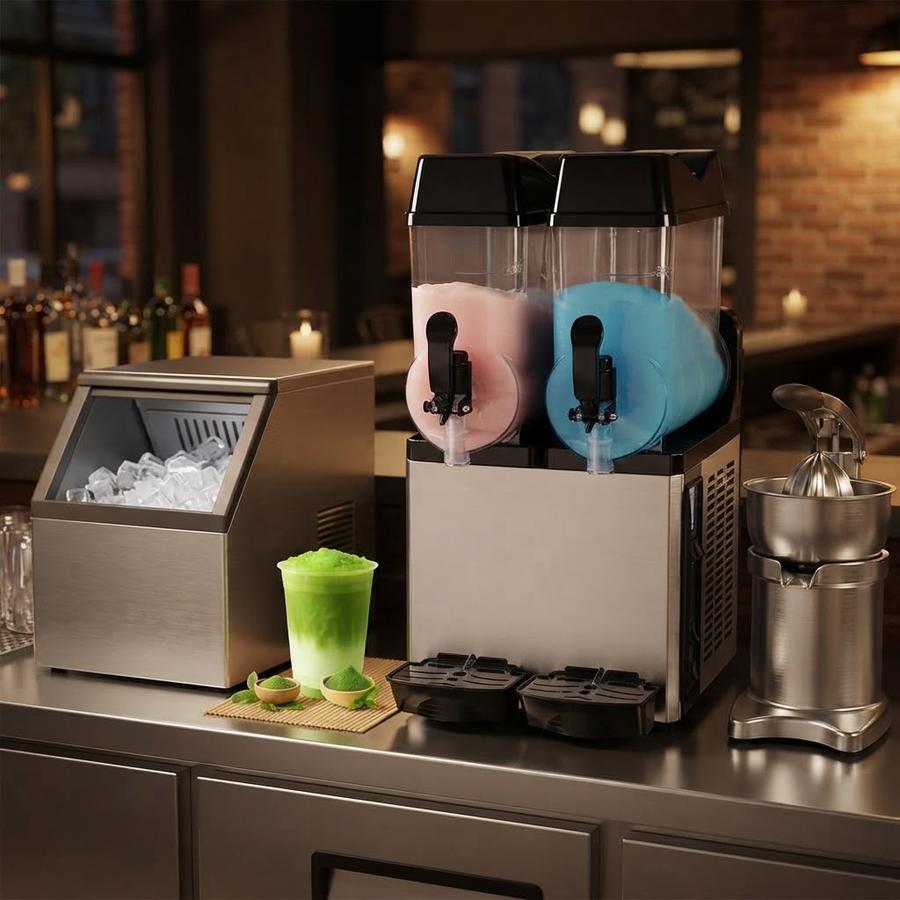
Both 12L tanks freeze on separate circuits, so a margarita batch and a kids' flavor run side by side to roughly 96 servings.
Slushy tanks run 304 stainless, the bone-saw worktop food-grade steel, and both take a nightly wash-down without pitting.
Both under-counter ice makers and the bone saw carry two years of coverage plus 24/7 after-sales support, documented in the manufacturer spec.
Ice, juice, slush, and bone cutting from one brand: each station lists its throughput, from 100 lbs of ice a day up.
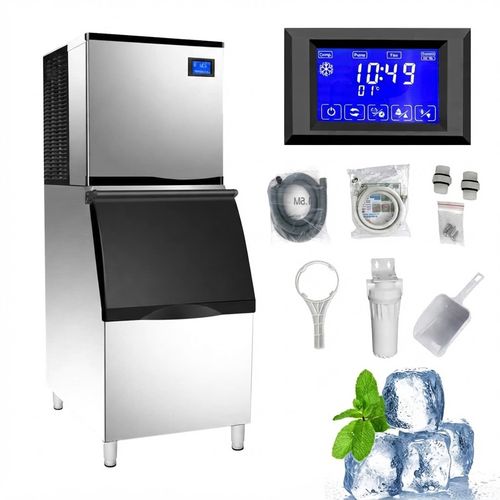
Pull 380 clear cubes out of a single 8 to 15 minute cycle and the well behind the bar refills faster than a Saturday crowd drains it. Daily output reaches 1000 lbs, and the insulated 640-lb bin slows melt between rushes instead of sending it down the drain. An LCD panel runs production and starts the auto-clean and drainage cycle on one press. Where a bagged-ice program means a standing order and a walk-in stacked with sacks, this cabinet makes its own on site. Installation calls for a 220V circuit at 2280W, a water line, and a drain. No warranty term is stated for this unit, so the retailer return window is the cover you get.
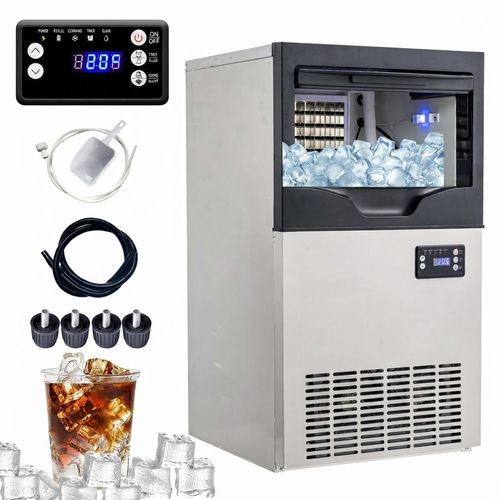
Slide a 47.4-lb stainless body under the bar rail and the ice program stops depending on a delivery van: 100 lbs a day, 45 cubes every 5 to 15 minutes, and a 30-lb bin that holds them up to 10 hours. Six thickness steps on the LCD panel move the cube between a thin julep chip and a dense 0.78-inch rocks cube, and the panel reads ambient temperature so a hot corner shows up early. Overflow prevention and blue LED disinfection run through every harvest cycle without a button press, so nobody babysits the bin on a Saturday night. Where an unbranded import ships with a one-line warranty card, this one carries a 2-year warranty with 24/7 after-sales support.
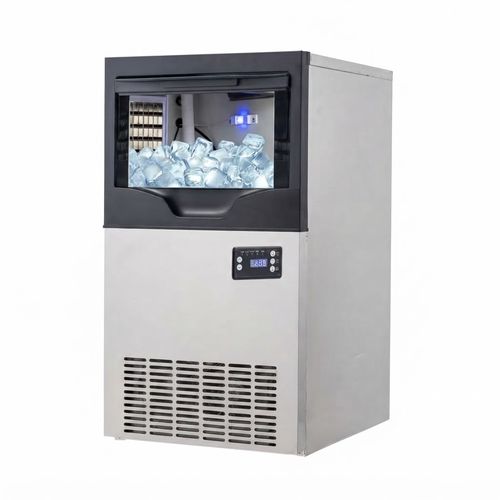
Freestanding on four adjustable feet, this 110V under-counter machine puts 100 lbs of daily ice inside a footprint of 15.15 by 15.74 inches, which is the difference between a dedicated ice station and a cabinet rebuild. Ice arrives in 5 to 15 minutes and the 30-lb bin holds it for up to 10 hours on thickened foam insulation. R290a refrigerant runs the cycle, and the LCD panel handles thickness, the 24-hour timer, and the one-press clean cycle. No buyer reviews have landed on this unit yet, so read it on spec: same YSD-KN body, same 2-year warranty, same 24/7 after-sales support.
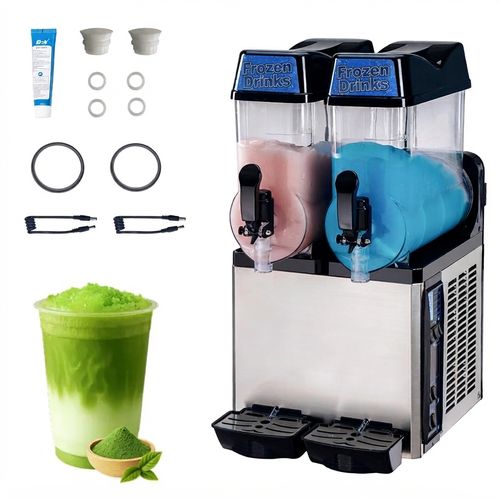
Fill both 12L tanks at eleven and a concession window pours roughly 96 servings of slush by the time the crowd arrives. Each tank freezes on its own circuit, so a margarita batch and a blue raspberry batch never share a flavor. Freeze time runs 15 to 50 minutes depending on sugar and alcohol in the recipe, and the lit front panel pulls foot traffic toward the counter. Where a blender chains an operator to each drink, this cabinet keeps pouring between refills. Food-safe 304 stainless and shatter-resistant polycarbonate tanks take a nightly wash-down, and a 1-year manufacturer warranty covers quality and functional defects.
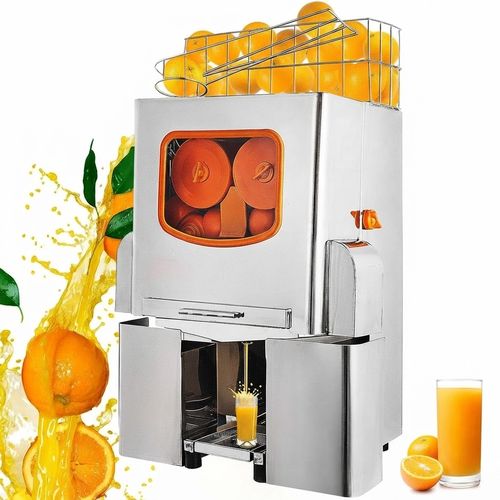
Load whole oranges into the top basket at ten and the brunch rail never waits on a peeler: 22 to 30 fruit a minute go in unpeeled and come out juiced and filtered. A 120W motor built for continuous use drives an embossed pressing sphere, and the pull-out filter box slides free so juice pours without a strainer step. Two pulp buckets and a drip tray take the waste, turning shift changeover into a rinse rather than a strip-down. Where a home centrifugal juicer needs peeling and a full teardown, this one takes pomegranates and lemons between 1.57 and 3.15 inches straight from the crate. No warranty term is stated for the juicer, so test it hard inside the return window.
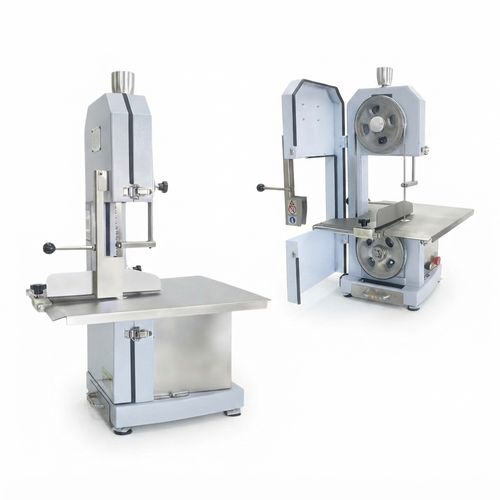
Break down a Friday bone-in order before the shop opens: a 750W pure-copper motor carries up to 441 lbs of meat and bone an hour without bogging at the joint. Cut thickness adjusts from thin ham slices to thick shank sections up to a 7-inch cutting height, and fresh pork, frozen beef, hard bone, and frozen fish all cross the 21x15-inch food-grade stainless worktop. A blade stabilizer, extended guard, waterproof switch, dual locking system, and four non-slip feet keep hands and frame where they belong. Five spare 14-tooth carbon steel blades ship in the box, and a 2-year warranty with 24/7 after-sales support stands behind the machine.
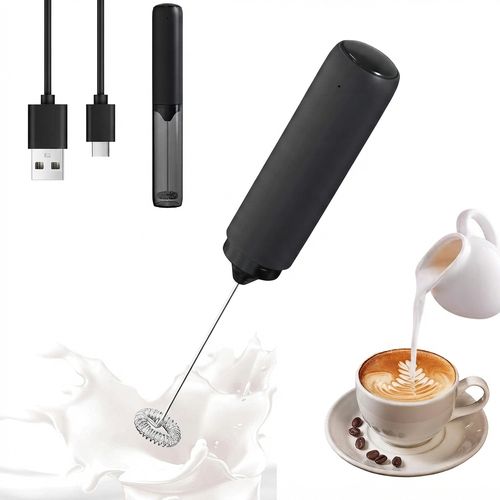
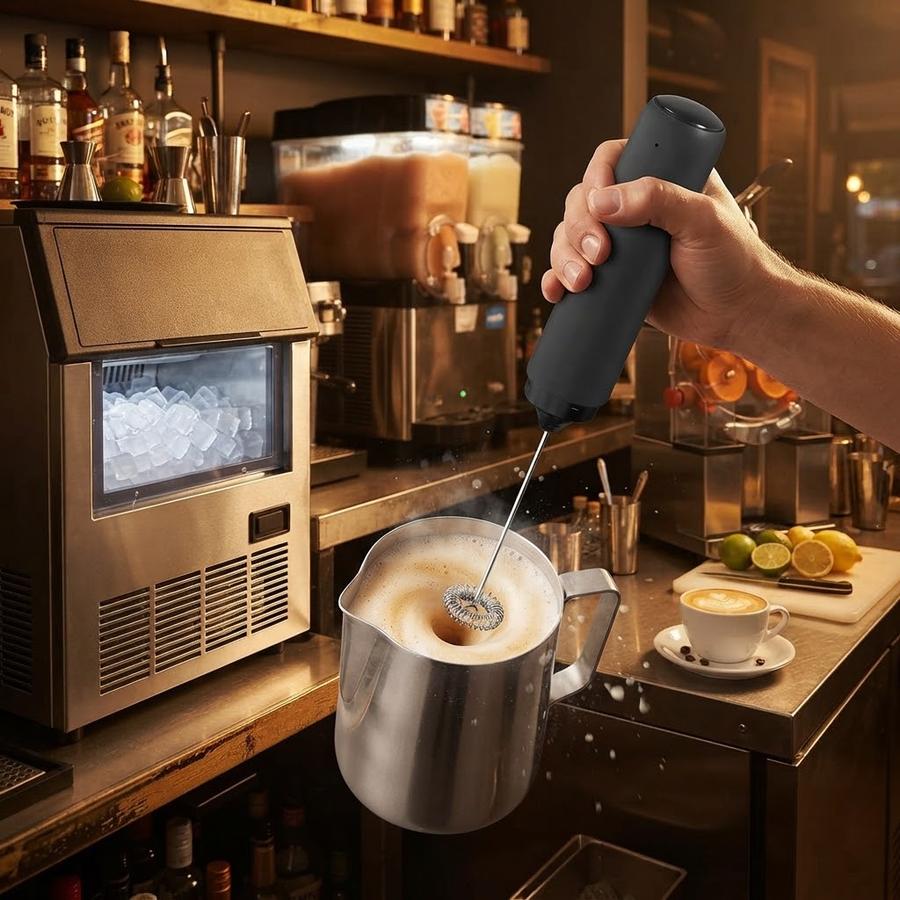
Drop the whisk into a latte pitcher and a 13,000 RPM motor builds microfoam in about 15 seconds, fast enough to keep a home espresso routine moving while the kettle finishes. A 500mAh battery charges over Type-C, so the wand lives in a drawer instead of on a charging stand, and at 0.16 kg it works one-handed. The detachable stainless whisk head rinses under a tap rather than soaking. Where a steam wand belongs to the espresso machine and its purge routine, this one froths matcha, hot chocolate, and egg whites for a cocktail dry shake. It carries 4.6★ across 91 verified buyer reviews, the only unit here with a review history that size.
Open the spec sheets and these numbers sit there: 13,000 RPM, 441 lbs of bone an hour, and the cutting rate most pages leave out.
| Published number | What it gives you | Source |
|---|---|---|
| 441 lbs (200 kg) per hour | Feed bone-in cuts across the stainless worktop through a Friday rush and the 750W motor holds its rate at up to 441 lbs an hour. Open three bone-saw tabs tonight and each one stops at motor wattage. You scroll all three before a pounds-per-hour cutting rate appears anywhere on the page. | manufacturer spec |
| 4.6★ from 91 verified reviews | Charge the milk frother wand once over Type-C and it runs shift after shift: 91 verified buyers rate the 13,000 RPM wand 4.6 stars. Scroll the frother tabs you have open and most review counts sit in single or double digits. A no-name accessory launched last quarter cannot show a year of buyer feedback yet. | 91 verified buyer reviews on the milk frother wand |
| 2-year warranty + 24/7 support | Lose ice on a Saturday and the clock matters: the under-counter machine and the bone saw both carry that coverage, behind a desk that answers at 2 a.m. Open two tabs at the same tier and one prints warranty included with no term beside it. Read this one instead and you get the years and the hours the desk answers, so you can hold it to both. | manufacturer spec |
| ~96 servings per 24L batch | Run two flavors at a concession window and one full 24L batch pours roughly 96 cups before anyone opens a fresh syrup box. Read a slush guide and you get tank gallons, then do the arithmetic yourself at the counter. Cups poured per batch is the number you staff a Saturday shift around. | manufacturer spec |
| 6 adjustable ice-thickness levels | Set the panel to its thinnest step for a julep press, or its thickest for a slow-melting rocks cube: one machine covers both. Check the rival listings and you find an LCD control panel named, then nothing about the thickness steps behind it. Most buyers count those steps for the first time after the crate lands. | manufacturer spec |
| 1.57 to 3.15 in fruit diameter | Drop a mixed crate of oranges, pomegranates, and lemons into the chute and the published diameter range skips the pre-cutting most machines require. Hold a pomegranate against a juicer guide and half of them never publish a feed-chute diameter at all. The exact range surfaces rarer still, usually after you have already paid. | manufacturer spec |
Bar rush, brunch juice line, concession window, butcher prep: what each station does at 9 p.m. when service peaks.
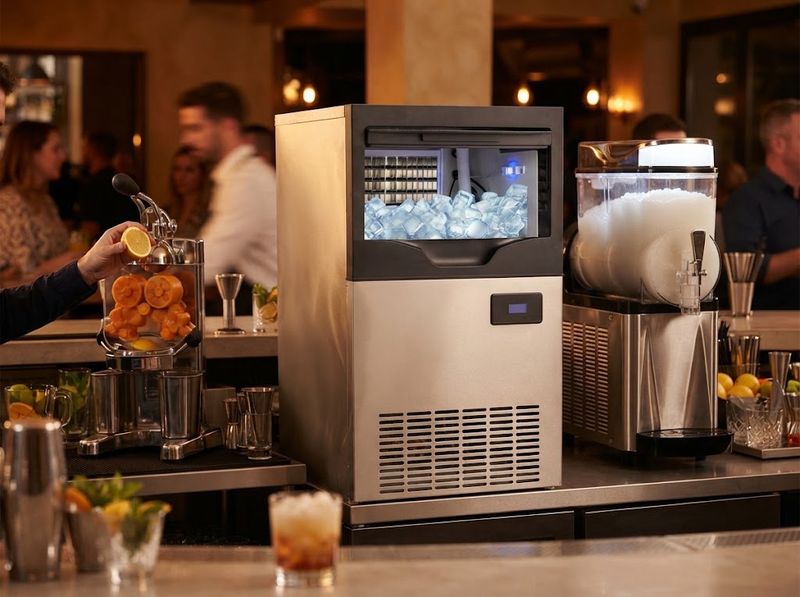
The under-counter ice maker keeps six thickness settings behind its LCD panel: thin chips for a julep, dense 0.78-inch cubes for a highball. Ice lands in 5 to 15 minutes, and the 30-lb bin holds it through a second seating. Ambient temperature reads on the same panel, which matters when the machine sits a few feet off a grill line.
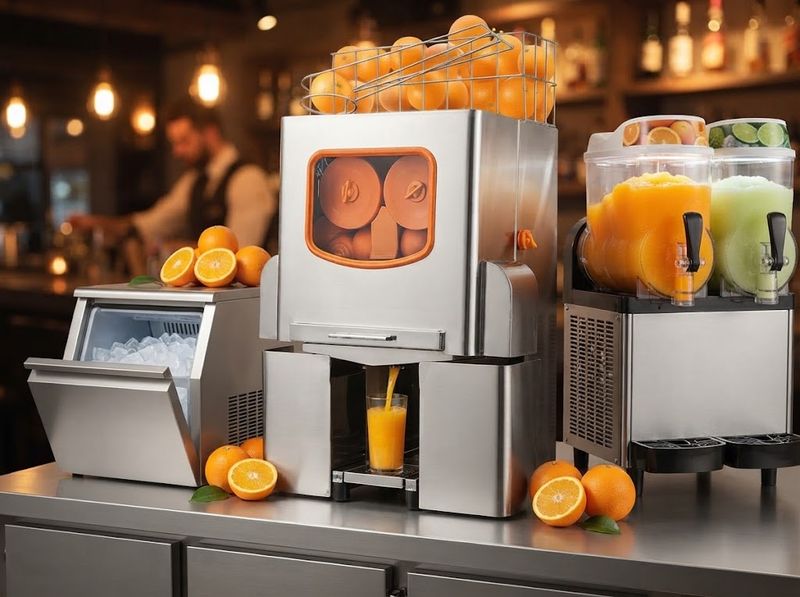
CMICE's commercial juicer takes oranges, pomegranates, and lemons straight from the crate at 22 to 30 a minute, with no peeling station in front of it. The machine presses and filters in one pass, and the pull-out filter box slides free for the juice. Two pulp buckets and a drip tray catch the rest, which turns changeover between shifts into a rinse instead of a strip-down. One buyer described juicing a season of oranges and grapefruit in two afternoons, work that had taken six weeks by hand.
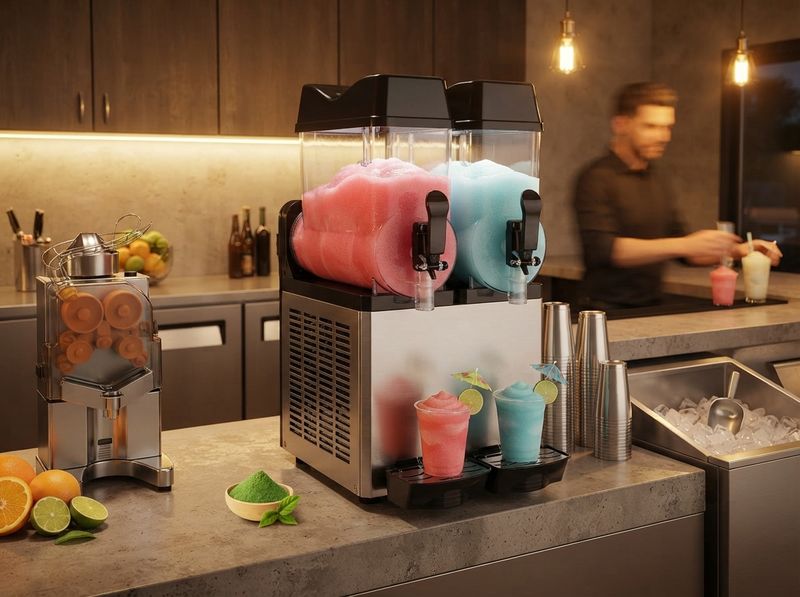
Two 12L tanks freeze independently inside the CMICE slushy machine, so an alcoholic batch and a kids' flavor run side by side without touching. Freeze time runs 15 to 50 minutes depending on sugar and alcohol in the mix, which means a stand opening at noon starts its batches at eleven. Pre-mixed liquid goes in the top, the mode goes in on the panel, and the lit front panel does the selling. Auto-clean handles the nightly sanitize.
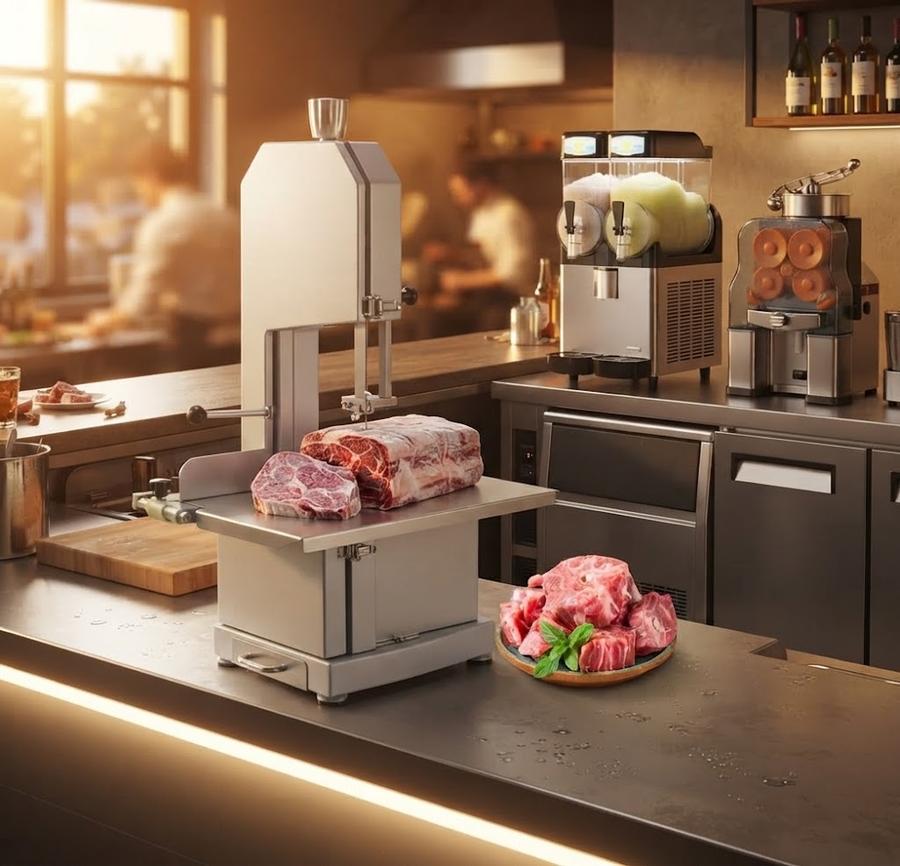
The CMICE bone saw clears up to 441 lbs of meat and bone an hour, with cut thickness set from 0.12 to 3.93 inches. A dual-locking system holds the guard and the switch together, and the waterproof switch survives a wash-down without shorting. Fresh pork, frozen beef, hard bone, and frozen fish all cross the 21x15-inch stainless worktop. Four non-slip feet keep the frame planted when the blade bites into a joint.
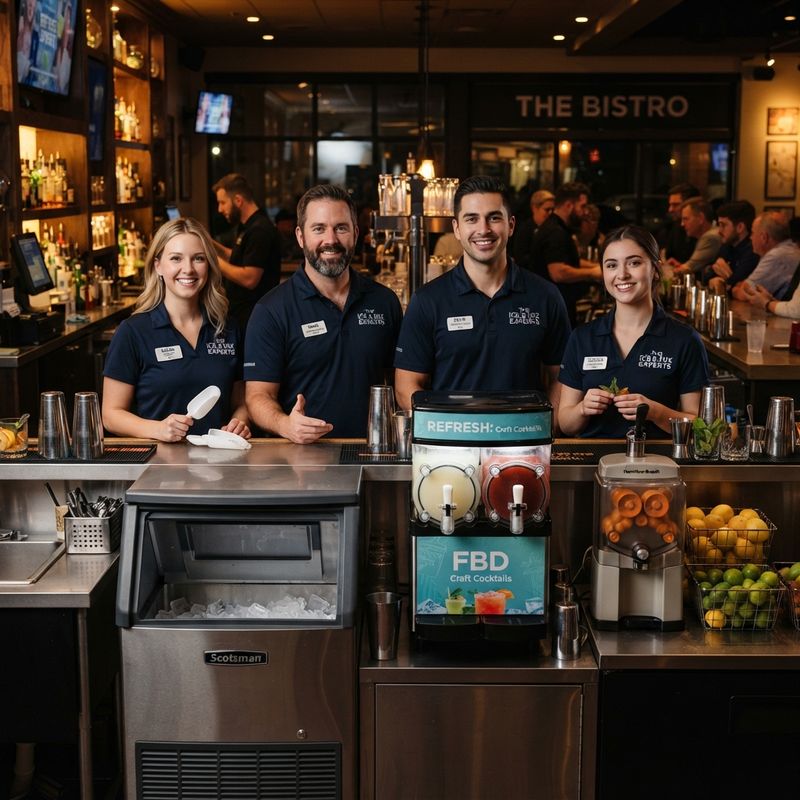
Every station here posts its numbers before it asks for your money: ice output per 24 hours, oranges per minute, pounds of bone per hour. Read the spec sheet for the station you need, then compare the tier that fits your floor.
Read the spec sheet before you trust the word commercial: the flagship ice machine runs 220V power, R404a refrigerant, and an insulated storage bin. Coverage runs uneven across the stations, so read the term on the card before you sign for the crate. The slushy machine holds one year, and the flagship ice maker states no term at all.
Order a juicer, a slush tank, and a bone saw in the same week and your parts and support still run through a single desk instead of four. Bolt the 47.4-lb under-counter machine beneath a bar rail, or stand the 78.7-inch flagship in a hotel ice room. Set the milk frother wand on a countertop beside the commercial units and it stands out as the outlier: 91 reviews from verified buyers put it at 4.6★ after months of daily shifts.
Search the commercial machines for owner reviews tonight and you find almost none, so judge them on spec sheets and coverage rather than stars.
Read the full brand storyFrom crate to first pour: size your peak night, check the 110V or 220V circuit, then run one clean cycle before service.
Count your peak night, not your average: cocktail bars run near 3 lbs of ice per guest.
Put a tester in the wall outlet before the crate arrives: under-counter units plug into a standard 110V run. Book an electrician for the flagship, which wants a 220V circuit, a water line, and a floor drain in place by delivery day.
Press the clean button at close and drainage runs while you cash out, so the machine is back in production before the morning shift.
Ring the desk at 3 a.m. when a compressor stalls mid-service and someone answers on the under-counter ice makers and the bone saw.
Eight verified buyer reviews, quoted as written. Coverage is thin on the commercial stations and deepest on the frother.
This is the greatest! Normally it takes me working many many hours a day for six weeks to juice our oranges and grapefruits. It took me two afternoons to do what normally required six weeks. Fantastic!
My family really really loves this icemaker because they love lots of ice that has enough ice for the whole family. Really glad we bought it.
The 24L dual tanks let me serve two flavors at once, and they run independently so no flavor mixing. Drinks freeze quickly in 15 to 50 minutes, keeping up with busy weekend rushes. The LED lighting looks amazing and really boosts impulse sales. Sturdy 304 stainless steel, and the auto-clean function saves me so much cleanup time.
Great little mixer. The whisk is not removed from the device, but it is not hard to bring it off and let it dry. You do need a larger deeper cup or else you will have coffee everywhere. One power level only.
I love this rechargeable frothing wisk. It uses a USB charger and once it is charged it lasts for multiple days without worrying about having to charge it daily. It works very well.
Compré esta varita espumadora de leche hace un poco más de un año y me ha durado de maravilla. Al ser recargable es supercómoda porque no tengo que gastar en pilas, y la batería mantiene una buena potencia.
It is useful and lasts for quite some time.
Very good for the price.
Day 1 through year two: install, first service, the auto-clean rhythm, and what the warranty covers per station.
Set the crate down beside the outlet you plan to use and read the plate first: under-counter units run 110V, the flagship needs 220V. Run the first batch that evening. If the compressor sounds wrong in week one, coverage on the under-counter machine is already live, and the retailer return window is still open.
Give the machine a day in its final spot before you judge output, because it settles only once the room around it settles. Watch the ambient reading on the LCD panel through a full service: a hot corner shows up there before it shows up as a short bin at 10 p.m. Move the unit a few feet off the grill line if the reading climbs.
By week four the auto-clean press at close becomes muscle memory, and the juicer pulp buckets get rinsed on the same rhythm. Swap the first bone-saw blade from the five in the box when the cut starts wandering off square rather than waiting for it to bind.
Call the desk in month 20 and what you hold depends on which station stopped. Give the model on an under-counter ice maker or the bone saw and two years of coverage with an overnight desk still stand behind the claim. Give the slushy machine and you sit inside its 1-year manufacturer warranty on quality and functional defects; give the flagship ice maker and no term is stated at all.
Ready for Day 1? The 100 lb under-counter machine plugs into a standard outlet — compare it against the flagship.
Both ice machines from the same brand, compared on the numbers the manufacturer publishes: output, bin, cycle, cabinet, power and coverage.
| Spec | 1000 lb flagship | 100 lb under-counter |
|---|---|---|
| Daily ice output | 1000 lbs per 24 hours | 100 lbs per 24 hours |
| Storage bin | 640 lbs, insulated | 30 lbs, foam-insulated, holds up to 10 hours |
| Cycle | 380 cubes in 8 to 15 minutes | 45 cubes in 5 to 15 minutes |
| Cabinet (D x W x H) | 35 x 30 x 78.7 inches | 15.74 x 15.15 x 28.34 inches |
| Power | 220V circuit, 2280W, electrician before delivery | 110V standard outlet, 230W |
| Refrigerant | R404a | R290a |
| Warranty | Term absent from the manufacturer listing; the retailer return window is your cover | 2 years plus a 24/7 after-sales desk |
One well behind the bar is served by the under-counter machine, which also carries the longer term. The flagship earns its 220V circuit once a room runs more than one well.
The questions that stall an order at midnight: the 2-year term, the missing NSF mark, and numbers you check before you click.
You cannot drive to a CMICE showroom before ordering, and the commercial machines carry almost no review history yet. Open the spec sheet instead on the night you shortlist: 1000 lbs of ice a day, a 640-lb bin, R404a, 2280W on a 220V circuit. Hold those four numbers against the machine sitting in your other tab before the quote expires.
No authorized service van pulls up on a Friday night, because no such network stands behind these machines. Ring the after-sales desk overnight instead and it answers on the under-counter ice makers and the bone saw. Pull one of the five spare blades from the box mid-shift and the saw cuts again before close, not after a courier run.
Hand an inspector your equipment list at a county walkthrough and no NSF, ETL, or CE mark appears on any of these commercial machines. Where that mark sits as a line item on the checklist, this equipment fails it that morning. Run a hand over what the spec does state instead: food-grade stainless panels, 304 stainless slushy tanks, and a dual-lock guard you release before the blade moves.
Read the coverage card station by station on install day, not once for the brand. Two years plus an overnight support desk stand behind both under-counter ice makers and the bone saw, so a compressor fault in month 14 is still covered. The slushy machine drops to a 1-year manufacturer warranty on quality and functional defects. Pull the flagship ice maker or the juicer out of the crate and no term is stated at all, which leaves the retailer return window as your cover.
Park the bin eight feet off the grill line and every machine in this class gives up ice output by the dinner rush. Watch the room temperature on the LCD panel through one full service: a hot corner shows there before the bin runs short at 10 p.m. If output disappoints in that corner, the under-counter unit is the safer buy: two years of coverage and an overnight support desk stand behind it, where the flagship states no term. Pick a capacity tier tonight, then check today's price.
Sizing, power, certification and cleaning, answered from the published spec sheets rather than from marketing copy.
Ice machines, a commercial citrus juicer, a dual-tank slushy machine, an electric bone saw, and a handheld milk frother wand. Four of those are commercial-duty stations built for restaurants, bars, cafes, hotels, and event venues; the frother is a countertop accessory for espresso work. Output runs from 100 lbs of ice a day on the under-counter machine to 1000 lbs on the flagship, and up to 441 lbs an hour of meat and bone on the saw.
The ice makers, juicer, slushy machine, and bone saw are specified for commercial service: continuous-duty motors, food-grade stainless bodies, and throughput rated per hour or per 24 hours. The bone saw and juicer also see home use for butchering and juicing in volume. The milk frother wand is a consumer accessory and belongs on a kitchen counter, not on a service line.
Bar, cafe, and small-restaurant owners buying revenue-critical stations against a startup budget, plus concession stands, butcher shops, and event caterers. A single-station bar is well matched to the 100 lbs a day under-counter ice maker. A multi-station room, hotel, or venue is the case for the 1000 lbs a day flagship with its 640-lb bin.
Here it means continuous-duty components and food-grade stainless construction: a 750W pure-copper motor on the saw, a 120W motor built for extended runs on the juicer, 304 stainless slushy tanks. It does not mean third-party certification. No NSF, ETL, or CE listing is stated on any of these units, and that distinction matters if your jurisdiction inspects for a certification mark.
Ice, in almost every case, because ice failure stops service outright. The under-counter machine covers a single well at 100 lbs a day with a 30-lb bin, runs on a standard 110V outlet, and carries a 2-year warranty with 24/7 after-sales support. Move up to the flagship only when a room runs more than one well.
Support and parts run through a single after-sales desk instead of four separate ones, which shortens the phone tree when a Friday goes wrong. It also means one warranty conversation rather than several. The trade is that coverage is not uniform across stations, so keep the per-machine terms on file rather than assuming one blanket policy.
That skepticism is fair and the honest answer has two halves. These commercial machines carry almost no review history yet, and there is no local dealer network behind them. What stands in its place is a published spec you can hold the machine to, plus a 2-year warranty and 24/7 after-sales support on the under-counter ice makers and the bone saw. Buyers who need an established service contract in their county should weigh that gap seriously before ordering.
Up to 1000 lbs a day, produced as 380 clear cubes per cycle with each cycle finishing in 8 to 15 minutes. The insulated storage bin holds 640 lbs at a time. The cabinet stands 78.7 inches tall on a 35 by 30 inch footprint and draws 2280W from a 220V circuit.
The built-in bin holds 30 lbs, refilled at 100 lbs a day. Thickened polyethylene foam insulation keeps stored cubes frozen for up to 10 hours, so a bin filled at close is still usable the next morning.
Full cubes measure 0.78 by 0.78 by 0.78 inches at the standard setting, with six thickness steps on the LCD panel to make them thinner or denser. Thin settings suit crushed-style cocktail work; the thickest setting melts slowest in a highball. A batch of 45 cubes arrives every 5 to 15 minutes.
The flagship 1000 lbs machine uses R404a. Both under-counter units use R290a, a hydrocarbon refrigerant with a much lower global warming potential and a smaller charge size, which is common on compact ice machines.
Under-counter units run on standard 110V household service and draw 230W. The flagship needs a dedicated 220V circuit and draws 2280W, so a small venue may need an electrician before delivery. Confirm the circuit before the crate arrives rather than after.
Between 22 and 30 fruit a minute, driven by a 120W motor specified for extended continuous use. The embossed pressing sphere raises extraction by roughly 5% over the previous design. At that rate a brunch rail of ten glasses clears in under a minute of machine time.
Fruit from 1.57 to 3.15 inches in diameter, which covers small limes and lemons through large navel oranges and pomegranates. Anything outside that range needs cutting first or will not press cleanly.
Roughly 96 servings from a full 24L fill, split across two independent 12L tanks. Each tank freezes on its own circuit, so a refill on one side does not interrupt service on the other.
Between 15 and 50 minutes, and the spread comes down to your recipe. High sugar and any alcohol content both depress the freezing point, so a margarita mix takes noticeably longer to reach slush texture than a plain fruit syrup. Batch an hour before doors open to be safe.
Up to 441 lbs, or 200 kg, of frozen meat and hard bone per hour on a 750W pure-copper motor. Copper windings run cooler than aluminium under sustained load, which is what keeps the rate steady through a full morning of case filling rather than dropping off after twenty minutes.
A 14-tooth carbon steel band blade, with five spare blades included in the box. The exact blade loop length is not published in the product specification, so measure the existing blade before ordering third-party replacements. Maximum cutting height is 7 inches and thickness adjusts between 0.12" and 3.93".
No. No NSF, ETL, CE, or FDA certification is stated on any CMICE commercial unit, and nothing here should be read as implying one exists. If your health department requires a certification mark on equipment in the kitchen, these machines will not satisfy that requirement. The published construction claims are food-grade stainless steel bodies, 304 stainless slushy tanks, and food-grade stainless on the bone-saw worktop.
Coverage is uneven and worth reading per station. Both under-counter ice makers carry a 2-year warranty with 24/7 after-sales service. The bone saw carries the same 2-year term plus 24/7 support. The slushy machine carries a 1-year manufacturer warranty covering quality and functional defects. No warranty term is stated for the flagship 1000 lbs ice maker, the commercial juicer, or the milk frother wand.
The stated slushy machine term covers quality and functional defects; the ice maker and bone saw terms are published as a 2-year warranty with 24/7 after-sales service without a parts-versus-labor breakdown. Since no on-site labor network is described anywhere in the specification, treat the coverage as parts and remote support and ask the after-sales desk for the claim process in writing before you buy.
The under-counter ice makers and the bone saw ship with 24/7 after-sales support, so the desk answers outside business hours. What does not exist is a local technician network, which means a failure is handled remotely and by parts rather than by a same-night visit. Operators whose revenue cannot survive a two-day outage should keep that in the decision.
They are recent releases, and the review counts show it: most carry zero or one rating. The milk frother wand holds 4.6★ across 91 verified buyer reviews, but that is a consumer accessory and says nothing about a 1000 lbs ice machine. Judge the commercial stations on published specification and warranty terms rather than on a star average that does not exist yet.
Available online through the product pages linked here. Stock and lead time are listed per machine, with most units shipping within two to three days of order. Check today's price on the station you want.
The saw ships with a blade stabilizer, an extended guard, a waterproof switch, a dual locking system that ties the guard to the switch, and four non-slip feet. Whether that satisfies a specific inspector depends on your jurisdiction, and no certification listing backs the machine. Ask your local inspector what they require on a band saw before you commit.
Most stations show as in stock and usually ship within two to three days. Availability moves, and several machines run low stock counts, so confirm on the product page rather than on this one.
Size to your peak night, not your average. A common planning figure is about 1.5 lbs of ice per guest in a full-service restaurant and closer to 3 lbs per guest in a cocktail bar, where every drink is built on ice. A 60-seat restaurant turning tables twice lands near 180 lbs a day, which the 100 lbs machine will not cover on a busy Friday. Storage matters as much as production: the flagship 640-lb bin absorbs a rush the 30-lb bin cannot.
The ice makers, juicer, slushy machine, and bone saw are specified for continuous commercial service through peak hours. Two conditions decide whether they hold up: ambient temperature around the machine, and cleaning discipline. Ice output falls and the compressor works harder in a hot room, and a skipped clean cycle shortens service life on any machine in this class.
Output drops and the cooling system carries more load. High ambient heat is the single most common cause of an ice machine underperforming its rating, and it strains the compressor over time. The LCD panel shows ambient temperature so the problem surfaces as a reading before it surfaces as an empty bin. Give the machine air on all sides and as much distance from the cook line as the floor plan allows.
No. An open door melts stored ice and makes the compressor run longer to replace it, which pushes more heat into the room than it removes. The net effect is a warmer kitchen and a shorter machine life.
Yes, and non-alcoholic mixes actually freeze faster because there is no alcohol depressing the freezing point. Fruit slush, frozen lemonade, and frozen coffee all work from pre-mixed liquid. Two 12L tanks let one side run a family flavor while the other holds a cocktail mix.
Both do. Sugar and alcohol lower the freezing point of the mix, so a margarita batch takes longer to reach texture than a plain syrup, which is why the published range spans 15 to 50 minutes. Very high alcohol content can stop a batch from setting at all; keep it under roughly 15% by volume and start the batch an hour before service.
Yes. Fresh meat, frozen meat, hard bone, and frozen fish are all listed uses, and the 7-inch maximum cutting height covers most whole fish and poultry sections. Set a thinner guide for portioning and open it up for bone-in cuts.
Yes. A 13,000 RPM wand does the same job as a dry shake and builds a stable egg-white head in about 15 seconds without diluting the drink with ice. Rinse the detachable whisk immediately afterward, since egg protein sets fast on a stainless head.
On output the gap is smaller than the price gap: 1000 lbs a day sits in the same band as a mid-size incumbent unit. On certification and service the gap is real. Premium brands list NSF and ETL and sell through dealers with local technicians; these machines state no certification and rely on a 24/7 remote desk. Buyers weighing an inspection requirement or a same-day service contract should pay for the incumbent.
Bagged ice looks cheaper per week and stops looking cheaper once you count walk-in shelf space, the standing order, and the night the delivery misses. A machine turns a water line into supply. For a single well, the 100 lbs a day under-counter unit is usually the break-even point rather than the flagship.
The difference shows up in duty rating and tank material, not in the first week. This machine uses food-safe 304 stainless and shatter-resistant polycarbonate tanks with independent cooling per tank, which is the configuration commercial service needs. Higher-end models add certification, longer warranties, and dealer service, and a bar running seven days a week should price that in.
Under-counter, in nearly every small-cafe case. The 1000 lbs machine is sized for multi-station bars, hotels, and event venues, needs a 220V circuit, and stands 78.7 inches tall. A cafe pouring iced drinks through a lunch rush is served by 100 lbs a day and a 30-lb bin, on a standard outlet and with two years of coverage behind it.
A steam wand heats and textures at once and stays the right tool behind an espresso bar. A handheld wand at 13,000 RPM builds microfoam in about 15 seconds for a home routine, matcha, hot chocolate, or a cocktail dry shake, and it costs nothing in machine downtime. It will not replace a wand on a service line.
Both under-counter units ship with a water inlet hose and a drain hose, which points to a plumbed install rather than manual filling. The flagship expects a water line and a drain as well. No manual-fill mode is described in the specification for either, so plan for a supply line and a drain point at the install location.
Unscrew the stand pipe inside the reservoir and clear the line with pressurized air or a drain brush. Sediment in the drain is the usual cause of a sump that overflows during the harvest cycle. Running the auto-clean cycle on schedule keeps most of that buildup from forming.
The common cause on machines of this type is a loss of clean contact across the evaporator plates, which slows heat transfer so the sheet sticks rather than dropping. Scale buildup produces the same symptom and is far more common, so run a full clean cycle first and check water hardness before assuming a hardware fault. Contact the after-sales desk if a clean cycle does not clear it.
Run the ice maker auto-clean cycle at least monthly, and more often on hard water. The slushy machine has an automatic clean function meant for a nightly run after service. The juicer has no automated cycle: its filter box, two pulp buckets, and drip tray are removable and want a rinse at every shift change. Wipe the bone-saw worktop after each session rather than scrubbing it later.
Five spare 14-tooth carbon steel blades ship with the bone saw, which covers the most common consumable for a long stretch. For other parts, the 24/7 after-sales desk is the route on the under-counter ice makers and the saw. Since no local dealer network exists, keep a spare blade set on the shelf rather than ordering on the day one breaks.
Too much milk for the pitcher, or too steep a tilt. The wand pulls a vortex, and a small pitcher filled past a third will climb the walls once that vortex forms. Fill to a third, keep the head just under the surface, and hold the pitcher near vertical.
Ice wells, brunch juice rails, concession counters and butcher worktops, one frame per station.
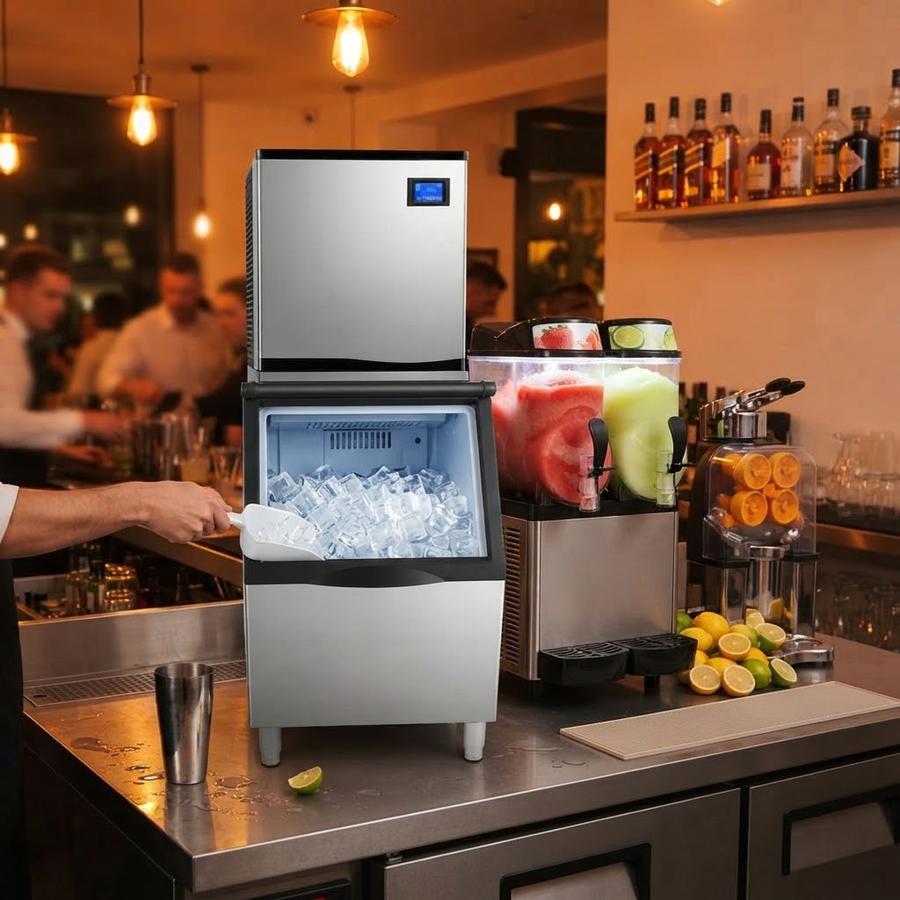
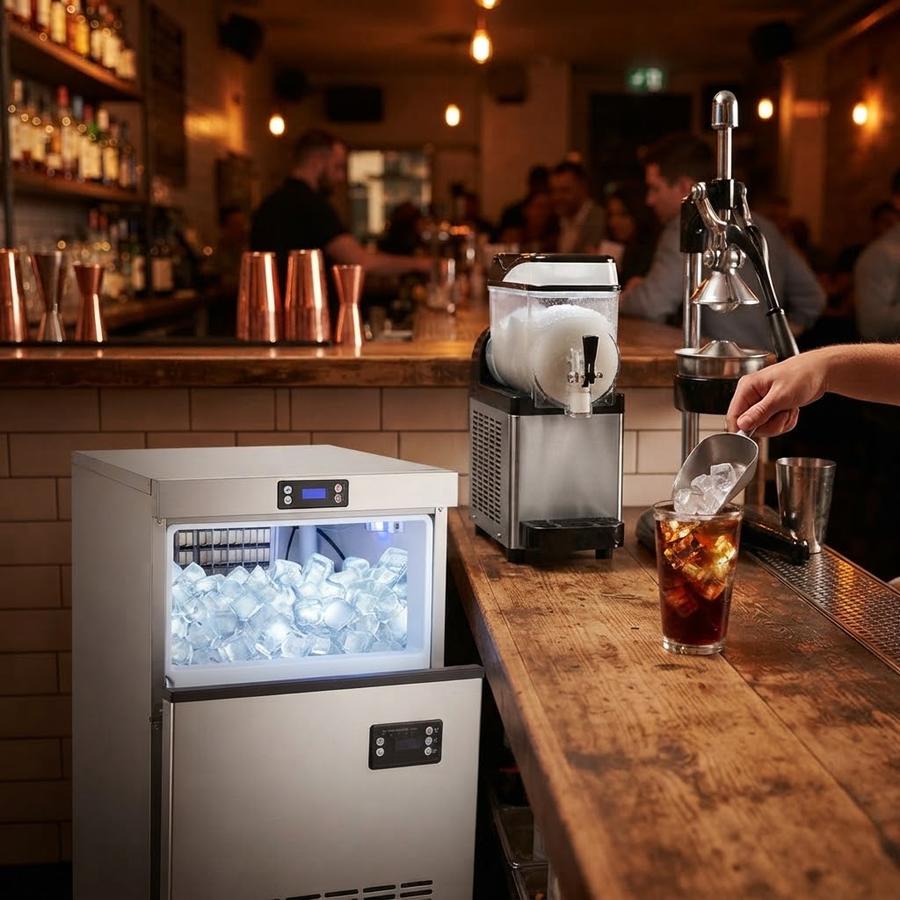
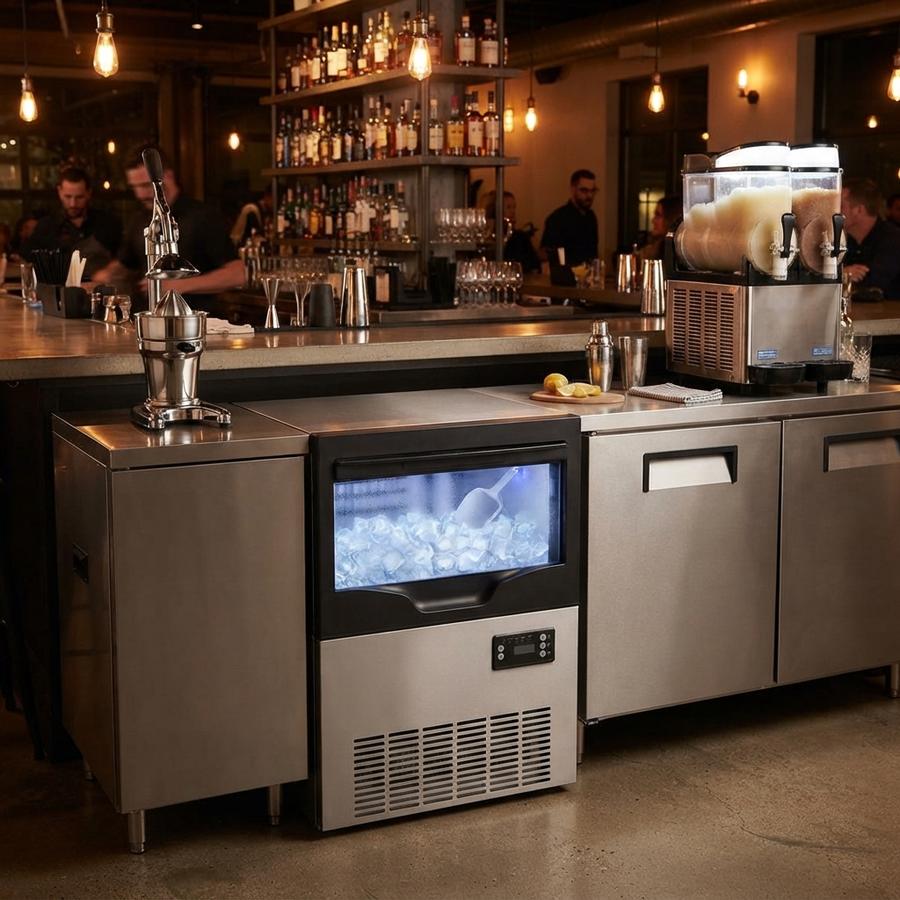
Sizing math for ice at 1.5 to 3 lbs per guest, the per-station warranty map, and the install questions worth asking before a 220V circuit gets pulled. The CMICE Kitchen Sizing Guide lands in the first email.
No spam. Unsubscribe anytime.
CMICE commercial stations
Amazon pricing updates daily — check today's price